
Franklin County Sex Offender Checks
The official starting point is the North Carolina Sex Offender and Public Protection Registry. The SBI manages that public system. The Franklin County Sheriff supplies and verifies local registration data. The state search is free and regularly updated, but it is not a complete list of every person ever convicted of a sexual offense. North Carolina law does not require every such person to appear, and juvenile delinquency entries covered by special rules are not displayed like ordinary adult profiles.
A Franklin County sex offender check has four practical channels. Use the registry for a name, place, or registration-number search. Sign up for proximity alerts for continued awareness. Contact the Sheriff about an error or suspected noncompliance. Use the national search when a location or identity crosses North Carolina's border. A single map view cannot replace these distinct channels.
The official registry landing screen shows how the state organizes those choices. The SBI registry source is pictured here.
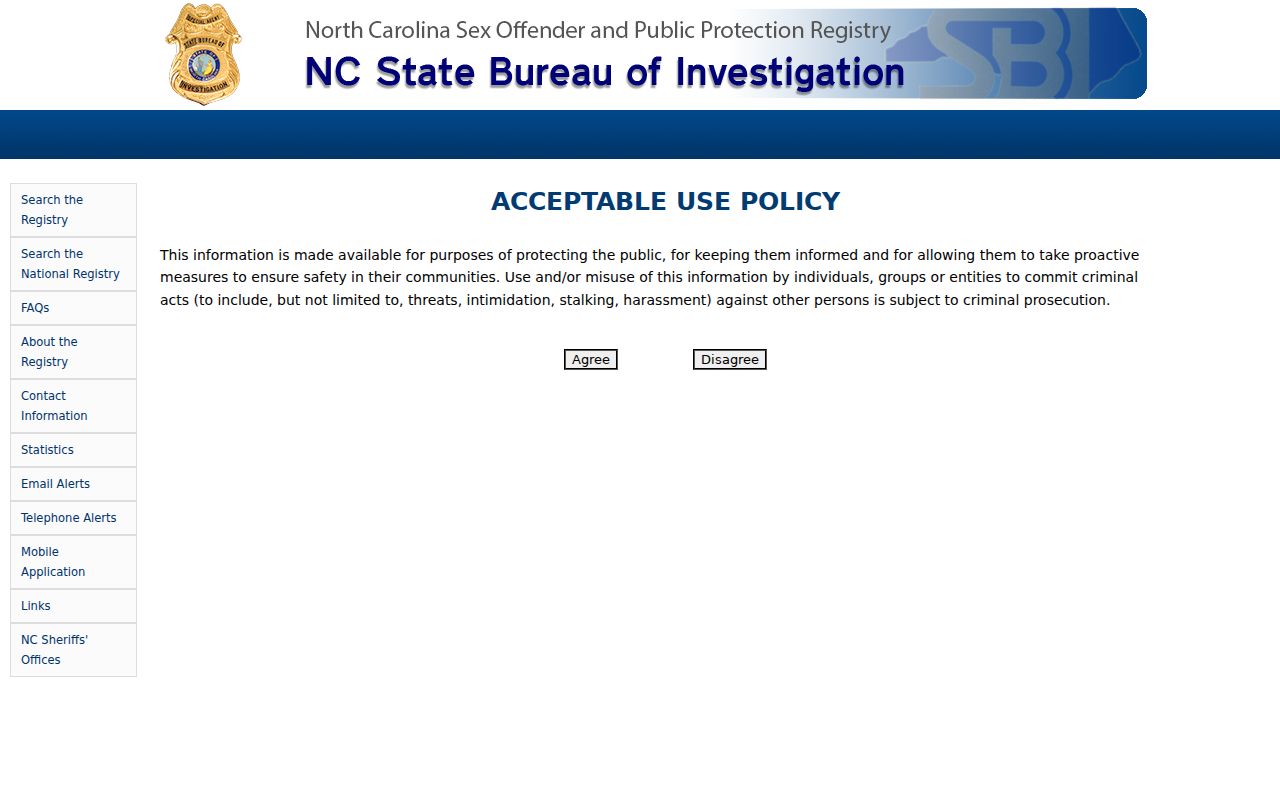
Its search tools provide the public layer, while the Franklin County Sheriff remains the local source for verification questions.
Franklin County Registry Search Paths
Choose the search mode that matches known facts. Pair a name with a city or ZIP code to reduce uncertain matches. County filtering limits results to Franklin County. An address search starts with a place instead of a person. Coordinates offer another geographic input. A Sex Registration Number is the direct route when known.
Online access is not the only path. The Franklin County Sheriff's Office at 285 T. Kemp Road in Louisburg handles local registration concerns in person and by phone. Call (919) 496-2186 on weekdays from 8 a.m. to 5 p.m. The SBI registry FAQ directs errors and suspected noncompliance to the county sheriff. Give specific details for law enforcement to assess.
The Sheriff's official contact FAQ confirms office and after-hours channels. A request for other releasable local records uses the county's public-record request route, not the registry search form.
Note: The Sheriff can check local compliance facts that may not be clear from a public profile or a recently changed map marker.
North Carolina Sex Offender and Public Protection Registry Searches
The North Carolina SBI search combines person and place tools. Begin a Franklin County registry search with the narrowest sound fact, then add fields to reduce same-name results. Partial names help with uncertain spelling. Read radius options from the live address form because interfaces can change.
- Open the official registry and read its conditions and reliability notice before searching.
- Choose a name, county, city, ZIP, address, coordinates, or registration-number route based on the facts available.
- Select Franklin County or add another known place field to narrow results without assuming that every similar name is the same person.
- Open a likely profile, compare multiple identifiers, read the status and conviction fields, then contact the Sheriff about a material error.
The official name-search interface illustrates the person-search route used for Franklin County registry records.
The form supports narrowing inputs, but the profile still needs an identity check against more than a name.
| Field Label | Type | Required | Options or Format Notes |
|---|---|---|---|
| Offender name | Text | No single field stated | First, last, or partial input; add place facts to narrow |
| City and ZIP | Text or selection | Optional | ZIP uses five digits |
| County | Dropdown | Optional | Select Franklin for county results |
| Address or nearby | Address fields | Route dependent | Street, city, state or ZIP; verify live radius choices |
| Latitude and longitude | Numeric | Optional | Alternate geographic method |
| Sex Registration Number | Text | Optional | Direct identifier search |
| Email alerts | Registration | Signup fields required | Address-proximity notice workflow |
Franklin County Registry Identity Checks
A matching name is a lead, not positive identification. The SBI cautions that only a fingerprint comparison can positively identify a person. Profiles may help distinguish people through a photograph, aliases, age details, physical traits, address, registration number, and conviction information. Still, some information is self-reported, facts can change fast, and data entry can lag a move or verification event.
Read the registry's scope before drawing a conclusion. The official scope and reliability FAQ explains why the database has limits.
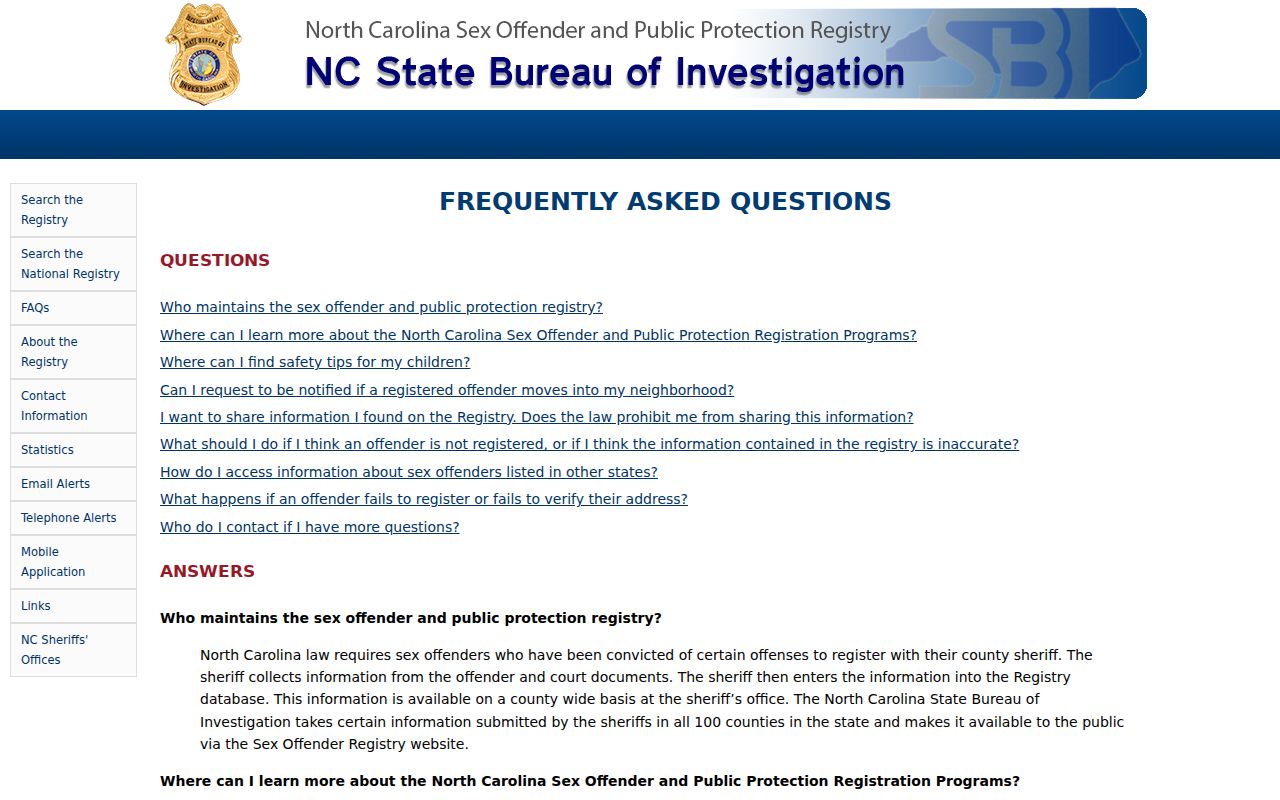
That context matters when a Franklin County result is missing, appears stale, or resembles a different person.
A map marker means that an address was reported in the registration system. It is not evidence of a recent offense, a measure of danger, or a Franklin County crime-rate statistic. If identity or address data appears inaccurate, save the relevant public details and contact the Sheriff. Do not confront the person shown.
Registry Profiles: What They Show
A public registry profile groups identity, location, registration, and conviction fields. The exact display can change, so fields should be read from the current profile. North Carolina does not use the public page to publish a simple Level 1, 2, or 3 risk score. It organizes registration under statutory programs and offense-based duties instead.
| Name and Aliases | Reported primary name, alternate names, and the Sex Registration Number when shown |
|---|---|
| Photo and Description | Photograph plus authorized sex, race, age, height, weight, hair, eyes, scars, marks, or tattoos |
| Registered Address | Reported residential location, county, other authorized addresses, and map or print tools |
| Offense and Statute | Conviction offense, statute, jurisdiction, and conviction date as reported |
| Program Category | Applicable North Carolina registration program, not a borrowed federal tier label |
| Registration Status | Public registration or status facts and available verification information |
Do not assume vehicle, school, or work fields. Use only what the current interface displays. A profile cannot prove each fact is current, so take a concrete concern to the Franklin County Sheriff.
Note: North Carolina profiles use program categories, so do not infer an unlisted risk level from the conviction text alone.
Franklin County Registry Alerts
The state registry offers email alerts tied to address proximity and address changes. This option suits a Franklin County resident who wants ongoing awareness without repeating the same place search. The signup flow requires an email account and address-related details. Follow the live prompts and keep the covered location current so notices remain useful.
An alert is a prompt to review official information. It does not state that a new crime occurred. Check the linked profile, compare its identifiers, and read the date or status facts. If the notice conflicts with known address information, contact the Franklin County Sheriff's Office with the specific profile and location rather than making a public accusation.
VINELink can provide some custody or status-change notices where participating data exists, but it does not replace a registry address search. Use the SBI email system for registry proximity. Use the Sheriff for suspected noncompliance. These channels avoid turning a map change into a claim the source does not support.
Registration Levels and Duties in North Carolina
North Carolina's system follows the registration program and governing offense, not a public three-tier risk score. Article 27A of Chapter 14 contains the core rules. Part 2 covers registration generally. Parts 3 and 4 address sexually violent predators and certain recidivists. Part 4A covers satellite-based monitoring. Do not add federal SORNA tiers to a Franklin County profile.
| North Carolina Category | General Duration | Public Visibility and Verification |
|---|---|---|
| Part 2 registrant | Generally 30 years from initial county registration; an eligible person may petition Superior Court after 10 years under §14-208.12A | Public adult profile; Sheriff administers category-specific address verification |
| Sexually violent predator or qualifying aggravated/recidivist category | Lifetime under the applicable Article 27A provision | Public adult profile and duties set by the governing category |
| Juvenile delinquency registration | Specially ordered and restricted under applicable law | Not displayed as an ordinary adult public profile |
Do not calculate an end date from the public page alone. The conviction date, governing statute, first county registration, later orders, federal minimum, and petition findings can matter. Failure to register, report an address change, return verification, or truthfully complete verification is generally a Class F felony under North Carolina Article 27A.
Franklin County Registry Residence Rules
North Carolina law restricts certain registrants from living within 1,000 feet of property used for a public or nonpublic school or a child-care center. N.C.G.S. §14-208.16 includes statutory exceptions, so the distance statement should not be applied without reading the full rule. Separate presence limits may apply under §14-208.18. These are state requirements, not proof that Franklin County runs a separate zoning registry.
A nearby-search result can help identify reported addresses around a school, child-care site, or other point. It cannot decide whether an exception applies or whether the measured points satisfy the statute. The Franklin County Sheriff handles local registration and verification, while the SBI coordinates the statewide database and supports verification letters.
Report suspected noncompliance to the Sheriff at 285 T. Kemp Road or (919) 496-2186. Provide the profile, address, and specific discrepancy. Law enforcement can check the governing category. Do not confront anyone.
Note: Registration duties differ by category, so a public map alone cannot establish that a Franklin County address violates state law.
Franklin County Registry Cross-State Searches
Use the National Sex Offender Public Website when the person or address may connect to another state, territory, tribal jurisdiction, or the District of Columbia. The U.S. Department of Justice service searches participating jurisdictions through one national layer. It complements the North Carolina registry. It does not replace the Franklin County Sheriff's role in checking local registration facts.
The official national interface shows the broader search route. The NSOPW search source is pictured here.
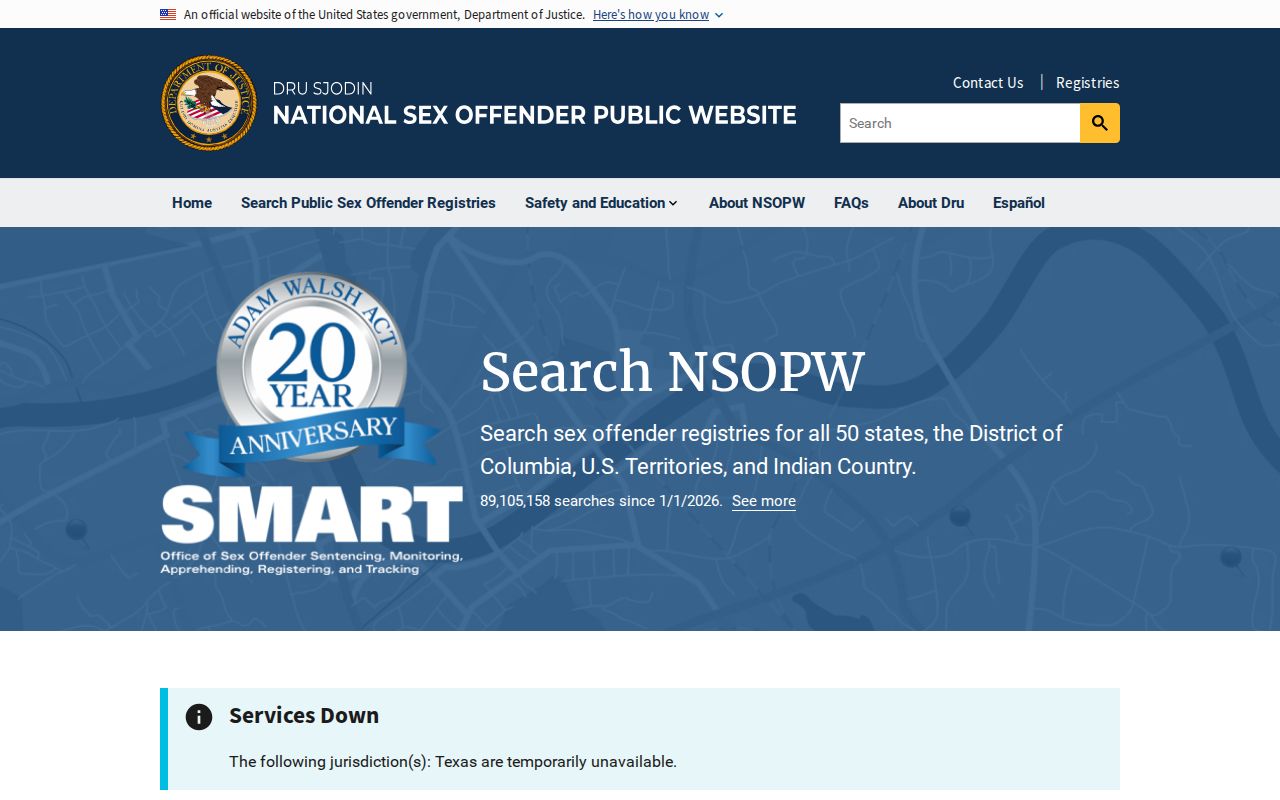
When a national result points back to North Carolina, open the state profile and use the Sheriff channel for a Franklin County error or compliance concern.
Jurisdictions differ in registration rules, public fields, and update speed. An empty result is not a universal clearance. Search name variants and relevant places, then compare several identifiers. Official custody systems may add status context, but they do not replace the registry.
Using Registry Information Lawfully
Registry information supports awareness and safety planning. Sound use means checking identity, reading the conviction and registration fields as written, treating address markers as reported locations, and sending suspected violations to law enforcement. It does not mean assigning new guilt, publishing unsupported claims, or treating a cluster of markers as a Franklin County crime statistic.
The SBI warns that registry information changes and may include self-reported content. Confirm a vital fact through official channels. The Franklin County Sheriff handles local registration, while the state registry and NSOPW provide public search layers.
Misuse can be prosecuted: The SBI registry FAQ warns that threats, intimidation, stalking, harassment, or other crimes committed with registry information are subject to prosecution. N.C.G.S. §14-208.15 governs public access to statewide registry information; public access does not authorize vigilantism or excuse a separate crime.
Keep address alerts current and review the full profile. Call the Sheriff about a concrete discrepancy or suspected noncompliance. In an emergency, call 911. Avoid direct contact.