
Criminal Court Cases in Franklin County
Franklin County belongs to Prosecutorial, Superior Court, and District Court District 11. Superior Court tries felonies and enters felony judgments. District Court hears misdemeanors, traffic matters, and the early stages of felony cases. Magistrates issue warrants and make initial release decisions. The District Attorney then reviews the charges for prosecution. This division of work matters because an arrest allegation may change before it reaches a trial calendar.
The Clerk of Superior Court keeps the case files for both trial divisions at 102 South Main Street in Louisburg. The clerk can help locate a file by case number, provide public terminal access, and supply plain or certified copies when available. The North Carolina Judicial Branch Franklin County page brings local calendars, court services, and online search routes together. That official source also shows why the court file, not a booking entry, is the right place to verify a filed count and its final result.
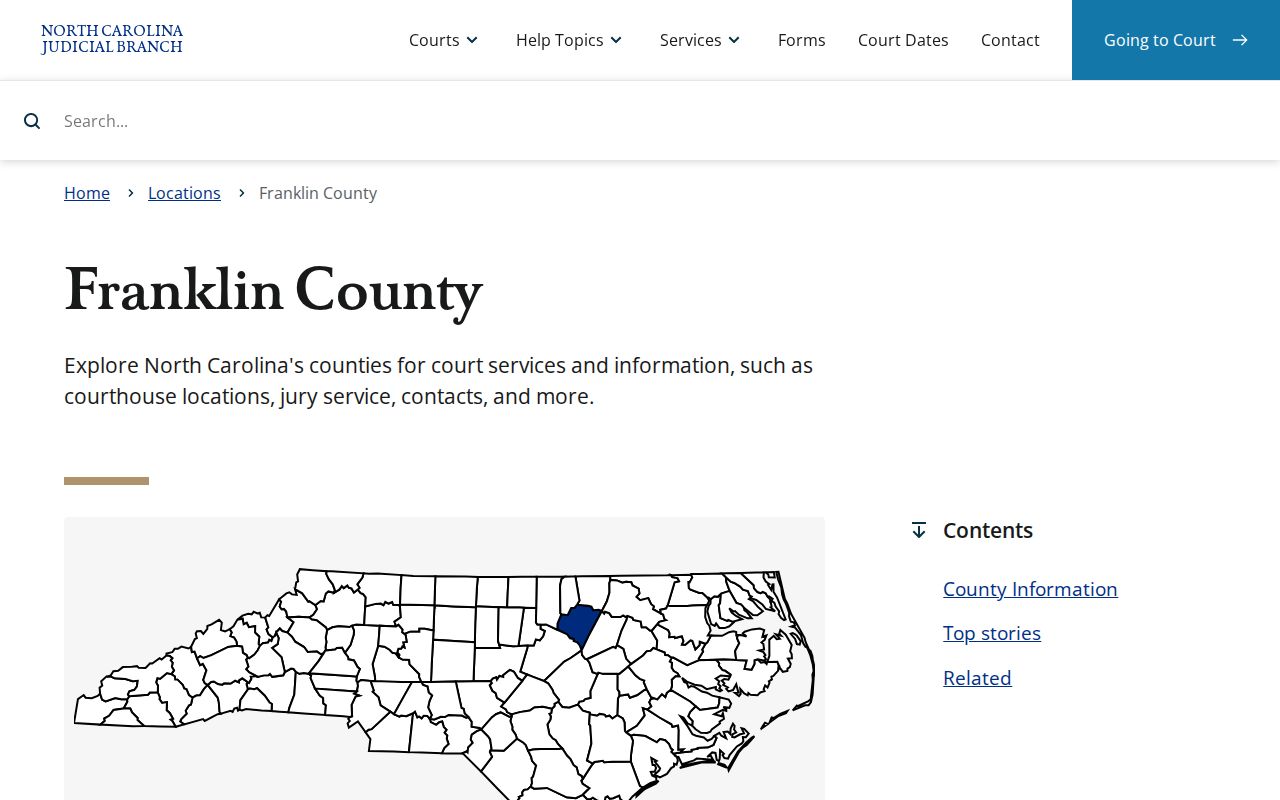
The local court page provides a useful first split between calendars, Portal records, payment tools, and direct courthouse help.
Franklin County eCourts Search
Franklin County moved to Odyssey and the North Carolina eCourts Portal on April 29, 2024. That change placed many public docket details in a statewide online system. The North Carolina eCourts Portal supports party-name and case-number searches, with filters for county, case category, filing dates, and party role. Select Franklin County before judging a same-name match. A result may show the case number, filing date, status, parties, charge level, hearings, disposition, judgment status, and financial entries.
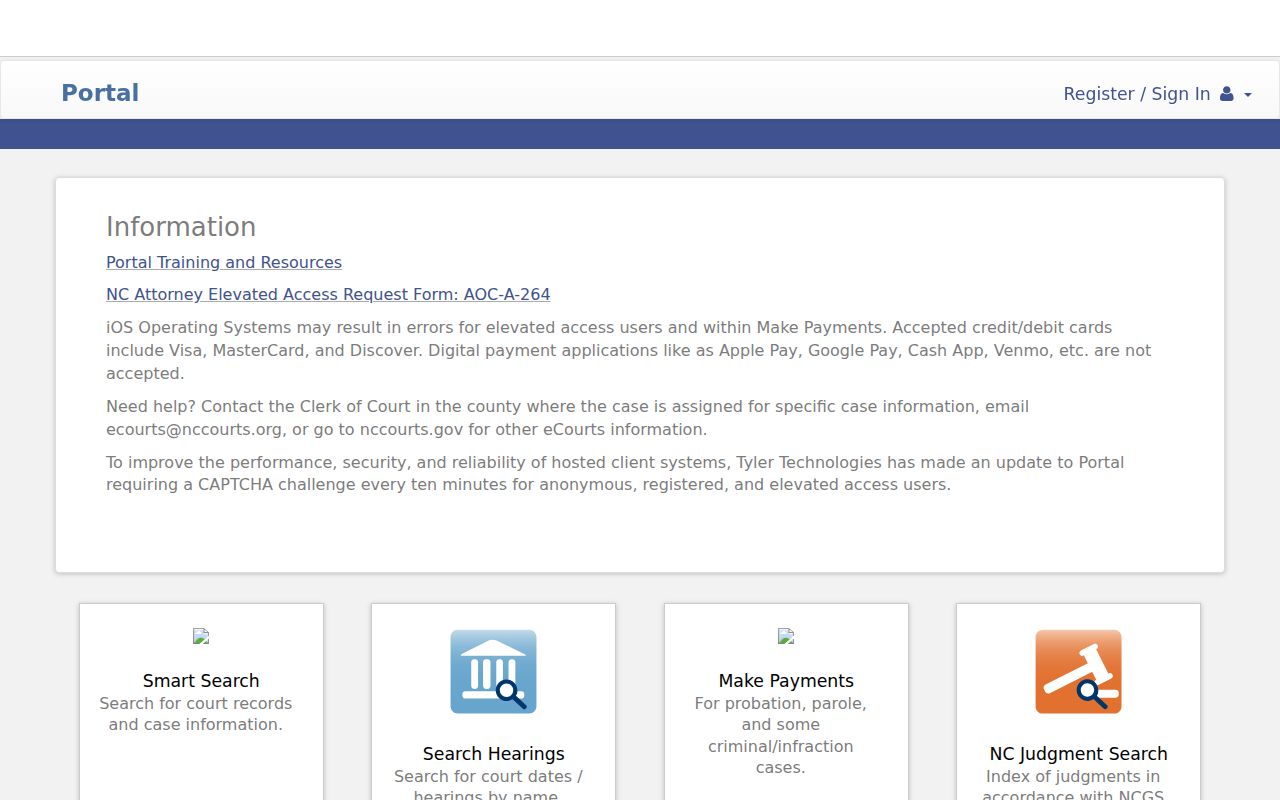
The Portal view is an index and case summary, so it should lead to the clerk file when the exact pleading or signed judgment controls.
| Field Label | Type | Required | Use |
|---|---|---|---|
| Search Type | Tabs | Yes | Choose Smart Search, hearings, or case and payment tools shown in the session. |
| Search Criteria | Text | Yes | Enter a party name or case number. |
| County or Location | Dropdown | No | Select Franklin County to cut unrelated results. |
| Case Category | Dropdown | No | Narrow the list to criminal matters. |
| Filing Date | Date range | No | Use known filing years to reduce false matches. |
| Party Type | Dropdown | No | Limit the person's role in the case. |
Franklin County Case Record Searches
Begin online, but keep the courthouse channels in the workflow. Portal detail varies by document and login, while older Franklin County files may not be scanned. A public terminal can search criminal matters by defendant name, case number, or victim or witness name. It can search Franklin County alone or statewide. Viewing and emailing available results at a terminal is free.
- Open eCourts, choose the public case search, and set the location to Franklin County.
- Search by a full party name or case number, then use the category and filing-date filters.
- Record the file number and compare status, charges, scheduled events, and disposition entries.
- Use a courthouse terminal when the online summary is thin, or ask the clerk for an older paper or scanned document.
- Tell the clerk whether a plain copy or certified record is needed and request the current cost before ordering.
The Judicial Branch describes each official court-record access channel, including Portal, terminal, and clerk requests.
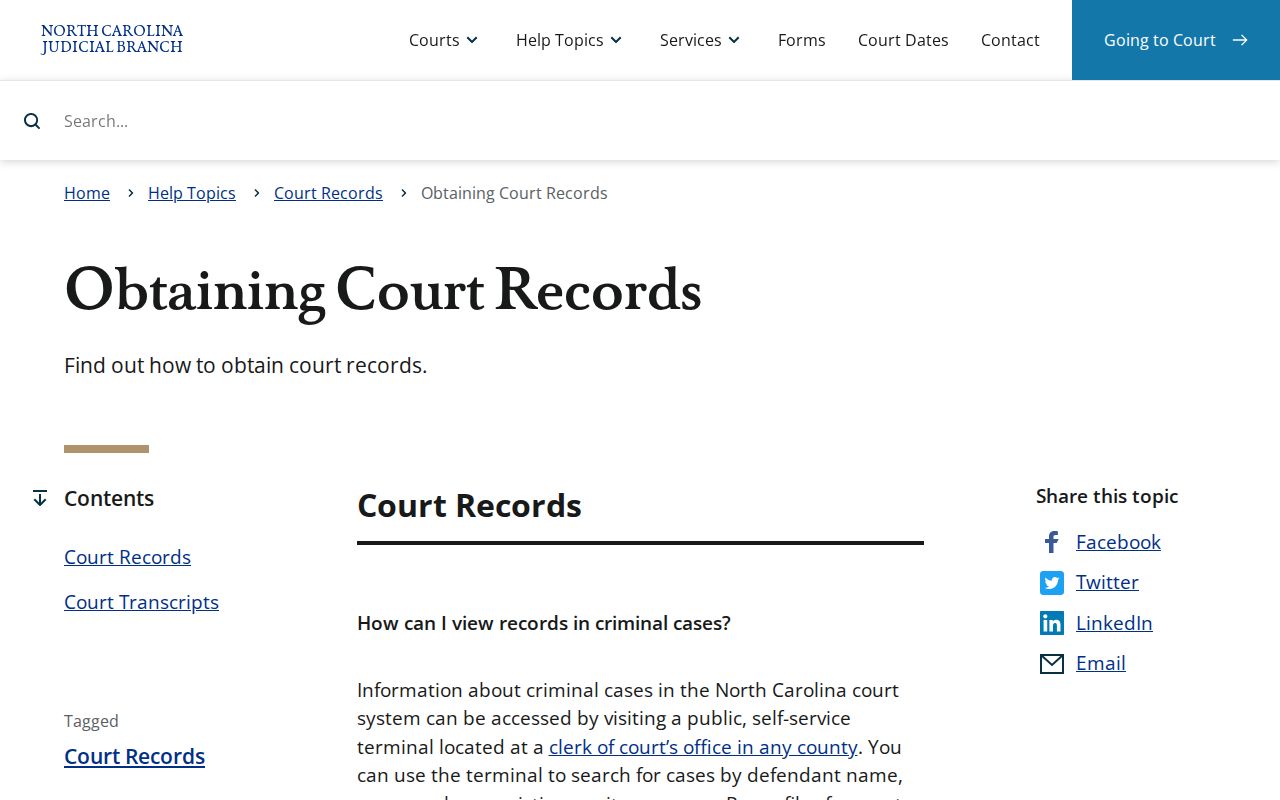
Using more than one official channel prevents a short online summary from being mistaken for the entire Franklin County case file.
Franklin County Clerk Record Options
The clerk counter is the direct fallback for an old file, a missing scan, or a certified product. Franklin County Court operates at 102 South Main Street, Louisburg, NC 27549, Monday through Friday from 8:30 a.m. to 5 p.m. The main clerk line is (919) 497-4200. Security screening is expected. The Judicial Branch identifies an accessible entrance on Nash Street, and the Hobgood Annex at 113 South Main Street is accessible from Main Street.
A certified county name search uses Form AOC-CR-314 and costs $25. It covers Franklin County, not every North Carolina county. In-person payment accepts cash, cards with a processing fee, money orders, and certified checks. Mailed orders accept money orders or certified checks, not personal checks. Free terminal review is the better first step when certification is not required. Neither method replaces a fingerprint-based SBI Right to Review for a person's own statewide repository record.
Franklin County Clerk
102 South Main Street
Louisburg, NC 27549
(919) 497-4200
Monday-Friday, 8:30 a.m.-5 p.m.
The official Franklin County Courthouse page confirms the location and public hours.
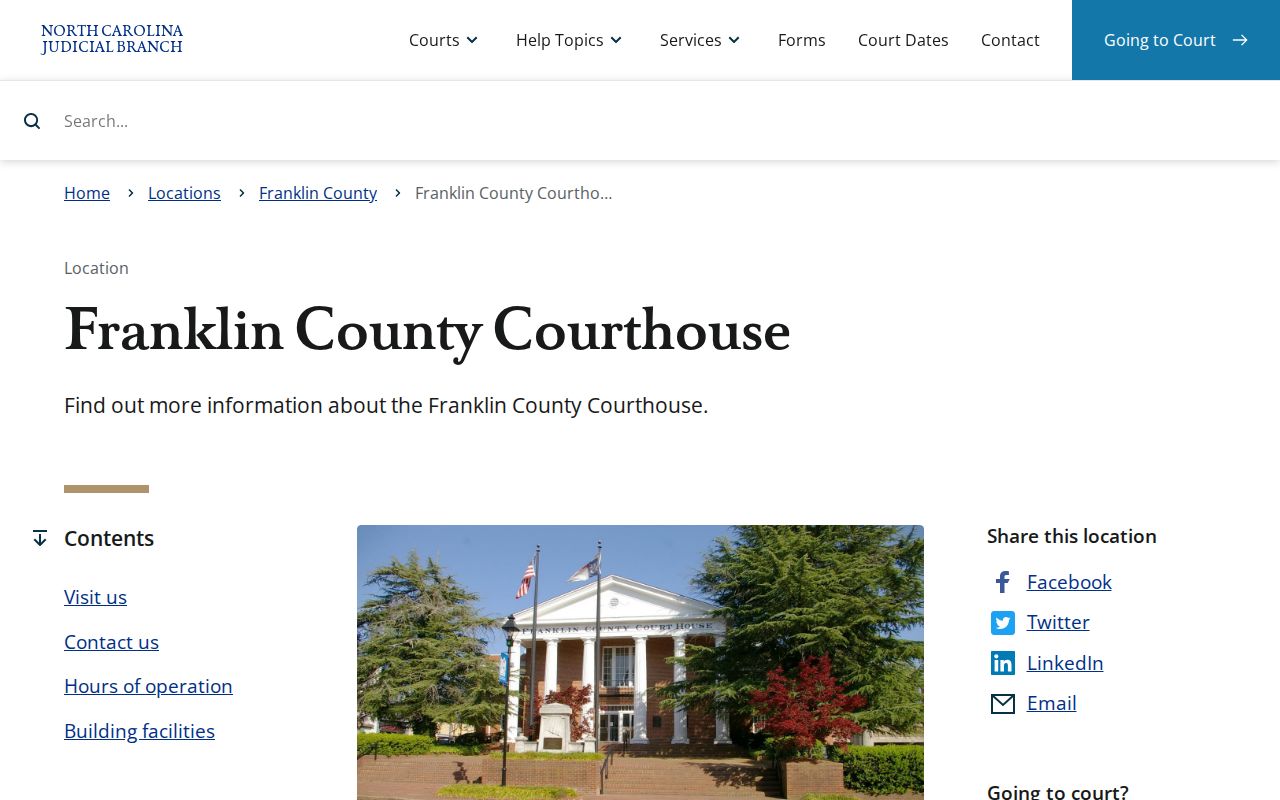
The courthouse remains the source for public terminal review and copies of documents that the Portal does not expose.
What a Criminal Case File Contains
A Franklin County criminal file is organized by its court case number, not by a jail booking number. North Carolina numbers often include a two-digit year, a criminal file code such as CR or CRS, and a sequence. The file connects the charging instrument to court events and the final judgment. It may also reveal why the count now shown by the court differs from the offense first listed at arrest.
| Case Number and Court | Identifies Franklin County, the division, file year, and unique sequence. |
|---|---|
| Charging Document | Shows the count filed for prosecution and its offense level. |
| Parties and Counsel | Lists public party roles and attorneys, subject to protected fields. |
| Docket Entries | Tracks filings, motions, process returns, and other recorded events. |
| Hearing Dates | Shows scheduled and completed court events and the assigned judicial officer when displayed. |
| Disposition and Judgment | Records whether a count is pending, dismissed, acquitted, or resolved by conviction. |
| Sentence and Costs | States the court-ordered result and may include financial balances or payment links. |
Social Security numbers, account data, protected victim or minor details, sealed files, and expunged matters should not appear in the public view. Document downloads also vary, so do not assume every docket entry has a free PDF.
Franklin County Case Outcomes
Small status words can change the meaning of a Franklin County case. “Pending” means the court has not recorded a final outcome. A dismissal ends the charge without a conviction, but does not by itself erase the arrest. An acquittal is a not-guilty finding. A conviction is a judgment of guilt by plea or verdict. Read each count separately because one file may contain more than one result.
- Arraignment
- The formal presentation of charges and entry of a plea.
- Nolle prosequi
- A prosecutor's decision to end or decline prosecution of a count.
- Indictment
- A grand jury's formal felony accusation after finding probable cause.
- Disposition
- The recorded outcome of a charge, such as dismissal, acquittal, or conviction.
- Trial de novo
- A new Superior Court trial after a qualifying District Court criminal appeal.
These terms help separate an open event from a final court result. They also show why a single “case status” label should not be read without the linked charge and judgment entries.
Criminal Case Stages in Franklin County
A case can begin with an arrest or summons. A magistrate handles initial process and release conditions, then the District Attorney reviews what to prosecute. Misdemeanors generally remain in District Court. A felony may move through a probable-cause stage or grand-jury indictment before Superior Court arraignment. Discovery and motions follow. The case may end through dismissal, plea, or trial, with judgment and sentencing entered by the clerk.
Case flow: Charges Filed › Arraignment › Pretrial › Plea or Trial › Disposition › Sentencing
A District Court criminal appeal can produce a new trial in Superior Court. That feature can confuse a reader who expects the first result to remain the only docket. Compare the division, event date, and most recent judgment before drawing a conclusion. Magistrates can be reached at (919) 497-4280, and the District Attorney line is (919) 497-4290.
Franklin County Court Payments
Financial entries are part of some Franklin County case views, but payment status is not the same as the legal outcome. The clerk accepts in-person cash, cards with a processing fee, money orders, and certified checks. Personal checks are not accepted. A mailed payment must use a money order or certified check. Case number and identifying details should accompany the payment so the clerk can post it to the right file.
The payment rules also point to the after-hours magistrate service at the Sheriff and Detention Complex. The Franklin County payment and magistrate page is the official place to confirm current instructions before sending funds. Never treat a payment receipt as proof that all charges, warrants, or court duties have ended.
Access Rules for Case Records
North Carolina law starts from public access to clerk records. N.C.G.S. §7A-109 makes clerk records open to inspection except where another law provides otherwise. Public access still has firm limits. Juvenile files, expunged matters, sealed warrants, protected victim and minor details, Social Security numbers, and financial identifiers may be closed or redacted. A blank Portal result can therefore mean no match, a spelling or filter issue, an older paper file, or a legal restriction.
When an eligible Franklin County charge should be removed from public access, expunction is a court process, not a search-setting change. The Judicial Branch publishes official North Carolina expunction guidance.
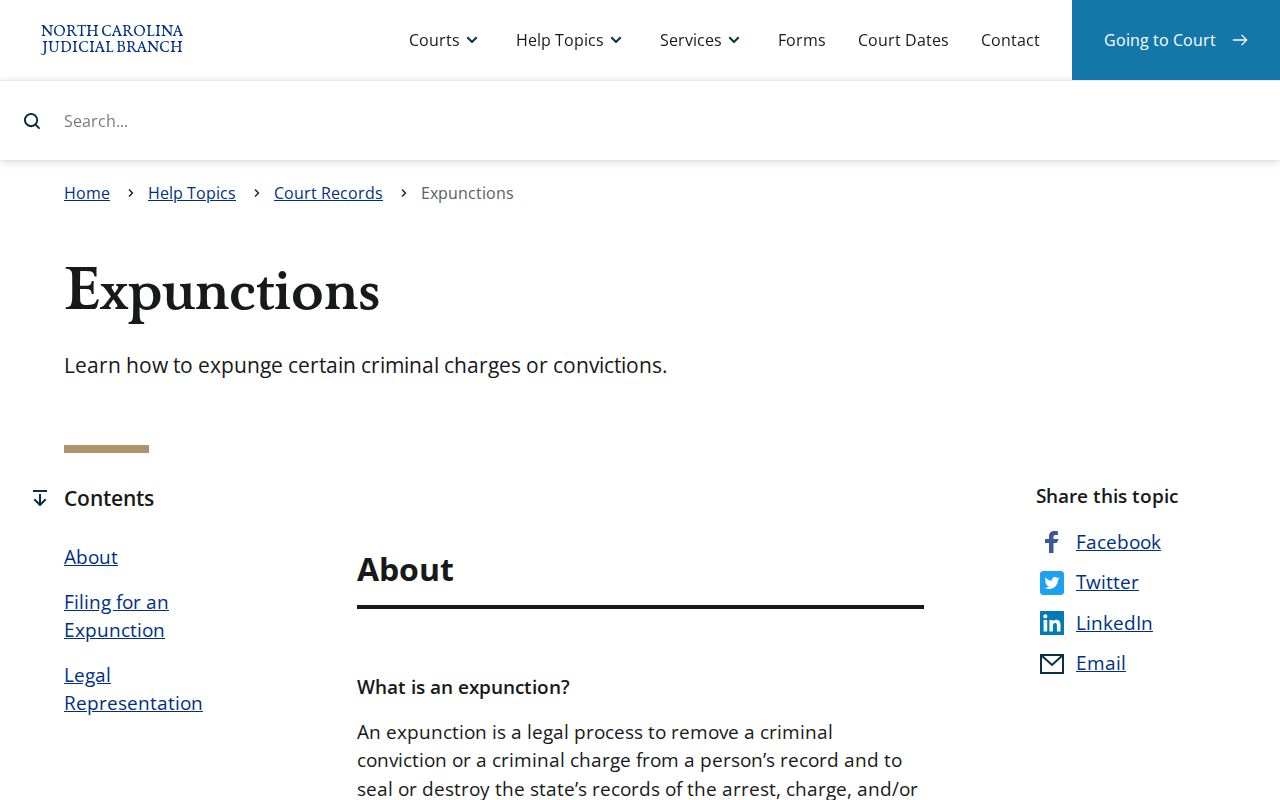
The correct petition depends on the charge, disposition, age, and statute, and many filings take months rather than days.
Franklin County Expunction Forms
Franklin County petitions are filed with the clerk in the county of charge or conviction. Dismissal forms include AOC-CR-287 and AOC-CR-288, while AOC-CR-297 and AOC-CR-298 address qualifying nonviolent convictions. Other forms cover narrower grounds. Most expunction filings carry a $175 fee, though dismissed or not-guilty petitions often have no fee unless the dismissal followed diversion or deferred prosecution. An indigent petitioner may request a waiver.
The Judicial Branch expunction form catalog links each official form to its statutory route.
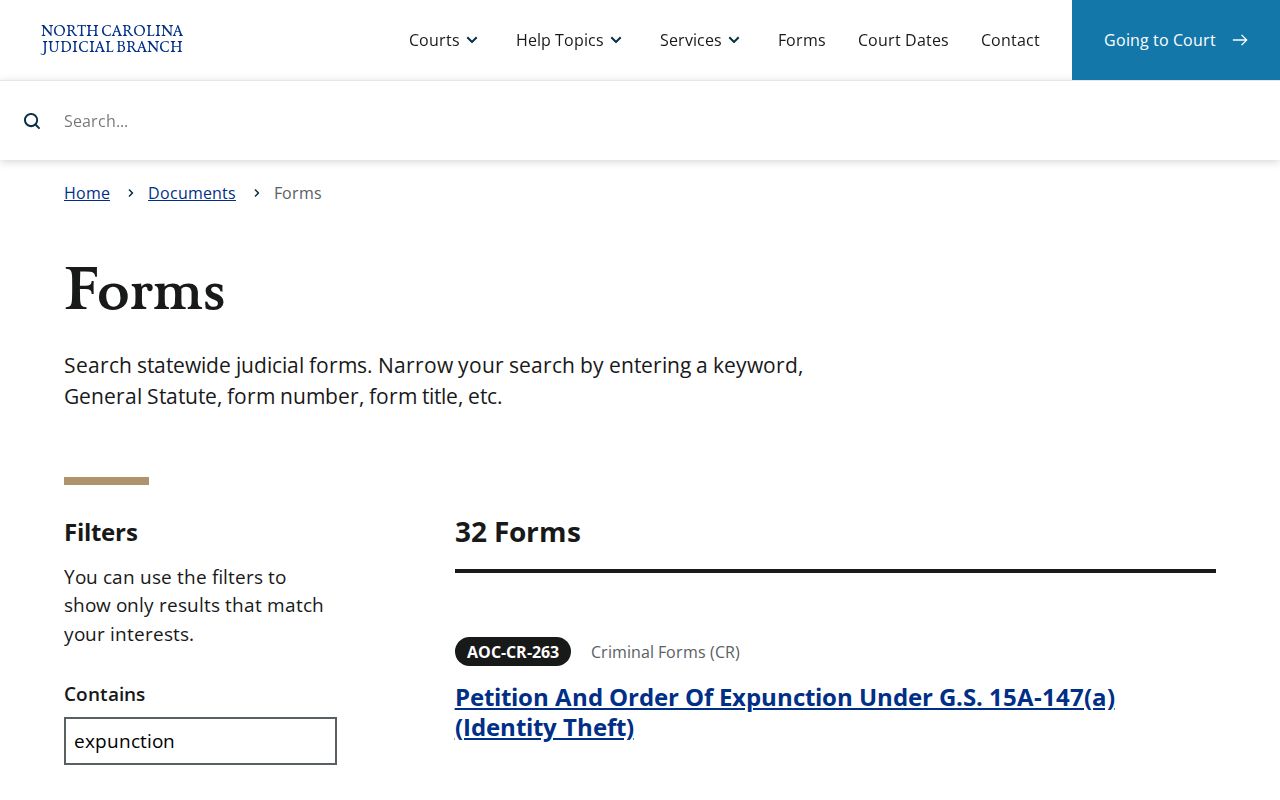
Match the form to the current statute and case outcome instead of choosing by title alone, then keep a certified copy of any signed order.