
Franklin County Criminal History Checks
Begin by naming the record, not just the person. A recent custody question goes to the Franklin County Detention Complex. A filed charge, hearing, judgment, or sentence belongs to the Clerk of Superior Court and North Carolina eCourts Portal. The arresting agency holds its own incident or arrest report. For your own fingerprint-supported statewide history, use the North Carolina State Bureau of Investigation Right to Review process. These products overlap, but none replaces all the others. The Franklin County government site is an official starting point for departments and public-record channels.
Its department routing helps separate county administrative records from court and sheriff records. Use this sequence for a focused Franklin County criminal record search:
- Decide whether you need an agency report, booking, court file, state history, custody entry, or registry record.
- Search eCourts with the party or case number and select Franklin County to avoid results from other counties.
- Call detention for a new booking that may not yet have reached the court portal.
- Use a courthouse terminal or request the underlying file when the web result lacks detail.
- Order the certified clerk search or your SBI fingerprint review only when that product matches the need.
Names alone can produce false matches. Add a file number, booking number, date, or lawful identifier when possible.
Franklin County Criminal Record Counters
Franklin County has two main records campuses in Louisburg. The Clerk of Superior Court is at the Franklin County Courthouse, 102 South Main Street, and keeps District and Superior Court files. The office is open weekdays from 8:30 a.m. to 5 p.m. The Sheriff and Detention Complex at 285 T. Kemp Road handles police-report routing, booking and custody questions, warrant-service questions, and after-hours magistrate business. Going to the wrong building can add an unnecessary stop.
Clerk of Superior Court
102 South Main Street
Louisburg, NC 27549
(919) 497-4200
Weekdays, 8:30 a.m.-5 p.m.
Franklin County Sheriff
285 T. Kemp Road
Louisburg, NC 27549
(919) 496-2186
Main office weekdays, 8 a.m.-5 p.m.
The Sheriff's official homepage confirms the local law-enforcement channel.
That office remains the direct source for releasable sheriff reports and current detention questions.
Note: The courthouse accessible entrance is on Nash Street, while the Hobgood Annex accessible entrance is on Main Street.
Official Background Checks in North Carolina
North Carolina does not offer a general-public SBI name-search portal. Franklin County residents instead have several official products. The clerk can perform a certified, name-based Franklin County search with Form AOC-CR-314 for $25. A courthouse public terminal provides free, non-certified searches and can search one county or statewide. The SBI Right to Review process is for a person seeking their own fingerprint-linked statewide record. Each choice has a different scope and proof value.
The Judicial Branch's official background-check options compare clerk and terminal routes.
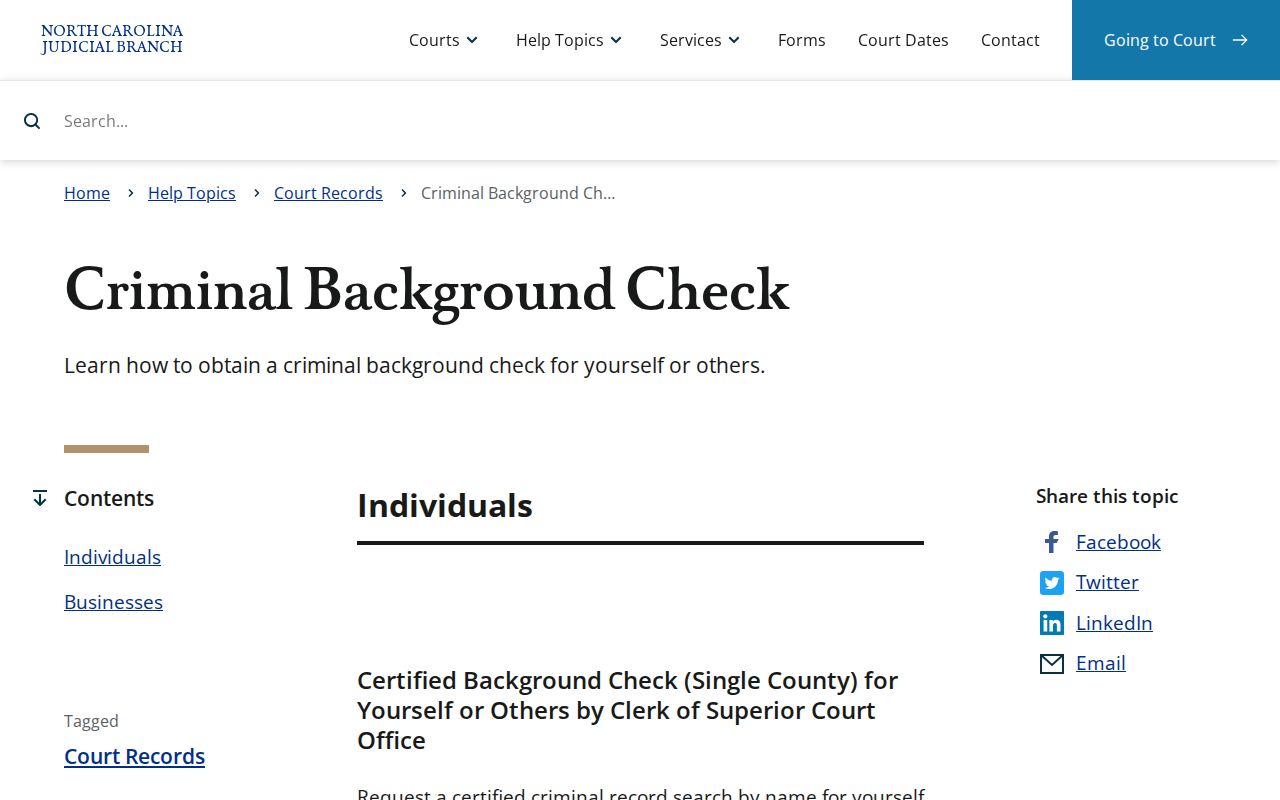
The page makes clear that the eCourts Portal is not the recommended formal background-check product.
| Official channel | Scope | Cost stated in research |
|---|---|---|
| Franklin Clerk AOC-CR-314 | Certified Franklin County name search | $25 |
| Courthouse public terminal | Free non-certified court search, county or statewide | No charge to view or email |
| SBI Right to Review | Your own fingerprint-linked North Carolina history | Current SBI fee not located |
| Louisburg fingerprint service | Fingerprint capture, not the resulting history | $20 cash |
Franklin County eCourts Record Shift
Franklin County joined North Carolina's Odyssey and Enterprise Justice rollout on April 29, 2024. The change placed public case information in the eCourts Portal while the Clerk remained the custodian of the official file. Older directions may still point only to paper indexes or courthouse terminals. Portal results are useful, yet an older or unscanned document may still require the clerk counter.
Portal searches accept a party name or case number. Filters can narrow by county, case category, filing dates, and party role. Selecting Franklin County matters because a common name can appear in many places.
| Portal field | Use | Required |
|---|---|---|
| Search Criteria | Party name or case number | Yes |
| County/Location | Choose Franklin County | No, but strongly useful |
| Case Category/Type | Narrow to criminal cases | No |
| Filing Date | Set a date range | No |
| Party Type | Narrow the person's role | No |
Kinds of Criminal Records
A Franklin County criminal record can mean several distinct documents. The arresting agency creates an incident or arrest report. Detention creates booking identifiers, fingerprints, charges received, bond entries, and custody status. The clerk organizes the filed case by a court file number. The SBI compiles fingerprint-linked arrest cycles and reported dispositions. NC DAC holds covered prison and community-supervision information. The registry publishes the authorized portion of registration data.
- Incident report: event facts and officer actions, with investigative detail sometimes withheld.
- Booking record: intake, charge, bond, and local custody information.
- Court case: filed counts, hearings, pleas, outcome, sentence, and financial entries.
- SBI history: fingerprint-supported arrest cycles joined to reported outcomes.
- Custody or supervision record: qualifying state prison, probation, post-release, or parole information.
The difference is practical. An arrest charge may later be changed or dismissed by the prosecutor. The court judgment is the place to confirm the disposition.
Franklin County Certified Record Choice
The $25 clerk search and the free public terminal do not provide the same product. AOC-CR-314 is a certified Franklin-only name search. In-person payment may be made by cash, card, money order, or certified check. Mail requests use a money order or certified check, not cash or a personal check. The terminal is stronger for free research across counties, but its result is non-certified.
The SBI Criminal Information and Identification page explains the central repository's fingerprint and disposition work.
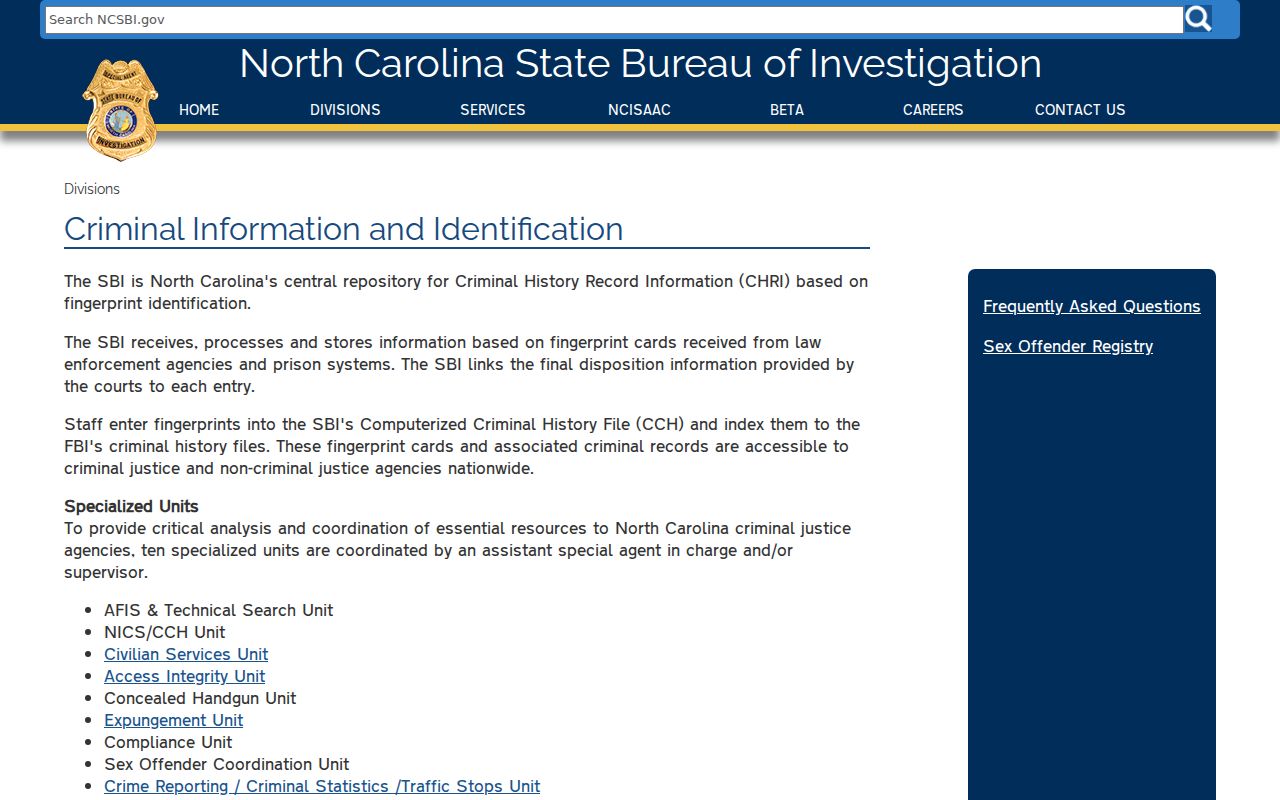
That system is distinct from a Franklin County clerk name search because fingerprints, not names alone, link the subject to the state record.
Same-name caution: A similar name is not a positive identity match. Use the file number and other lawful identifiers, or fingerprints for your own SBI review.
Franklin County Criminal Records: What They Contain
The fields depend on which custodian created the record. A court file centers on the county file number and proceedings. A booking record centers on intake. An SBI history begins with identifiers and then links fingerprint-supported arrest cycles to reported court outcomes. Reading the source label is as important as reading the charge.
| Name and identifiers | Name, aliases, date of birth descriptors, and repository numbers when lawfully shown. |
|---|---|
| Arrest or booking data | Agency, event or intake date, booking number, and charges received. |
| Charges and statutes | Alleged offenses at arrest or prosecutor-filed counts in the case. |
| Disposition | Pending, dismissed, acquitted, convicted, or another recorded outcome. |
| Sentence | The court's confinement, probation, costs, restitution, or other lawful terms. |
| Custody or supervision | Local detention, state prison, probation, post-release, or parole data where covered. |
- Disposition
- The recorded outcome of a charge.
- Arraignment
- The formal presentation of charges and plea.
- Indictment
- A grand jury's felony accusation.
- Expunction
- Statutory removal, sealing, or destruction of eligible state records.
A Franklin County file number is the best key for moving from a portal result to a paper or scanned court document. A booking number serves a similar role at detention.
Franklin County Custody Records Compared
The Franklin County Detention Complex and Franklin Correctional Center are different facilities. The renovated county jail has capacity for 176 local, state, and federal detainees. Call it for a new arrest or current local custody. Franklin Correctional Center in Bunn is an NC DAC medium-custody prison for adult men. Search NC DAC only after a person enters covered state custody or supervision. The NC DAC Offender Search is the official state locator.
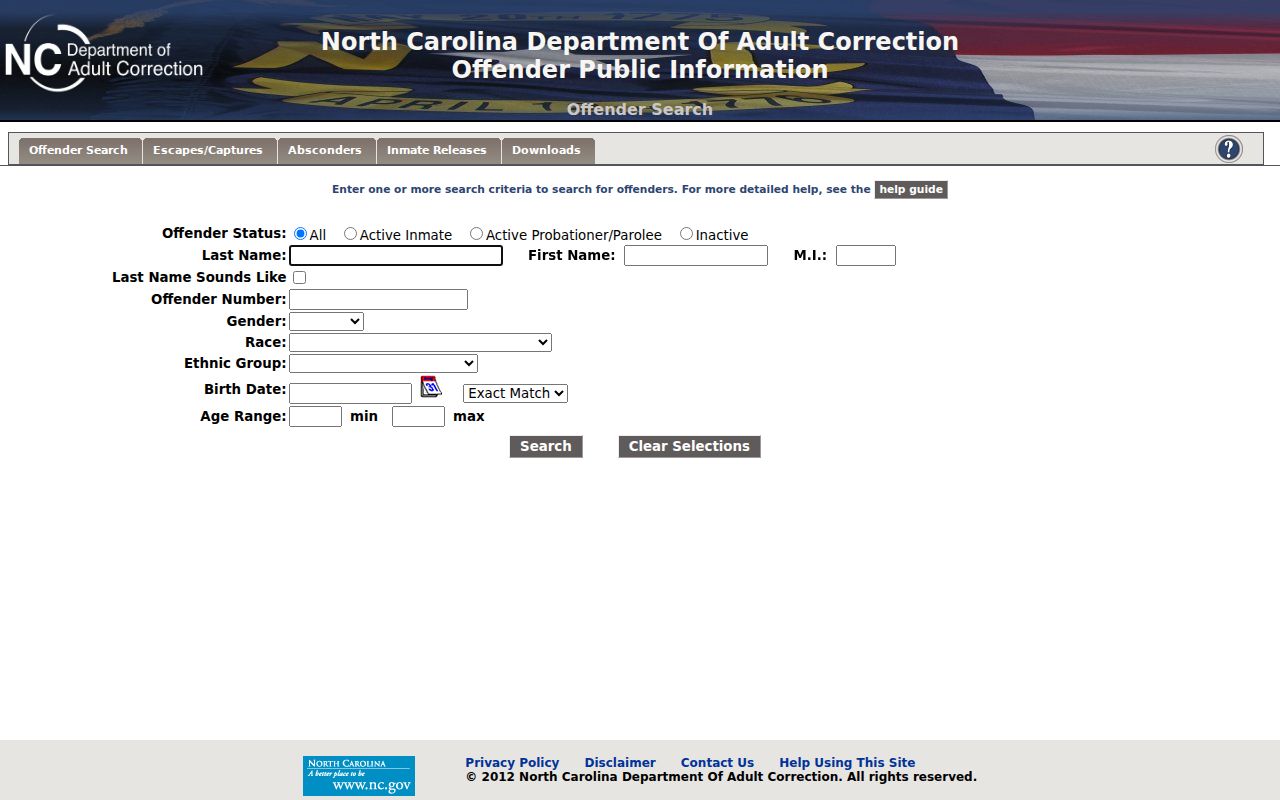
Its records do not stand in for a Franklin County booking entry or court judgment. The state's Franklin Correctional Center profile identifies the Bunn institution.
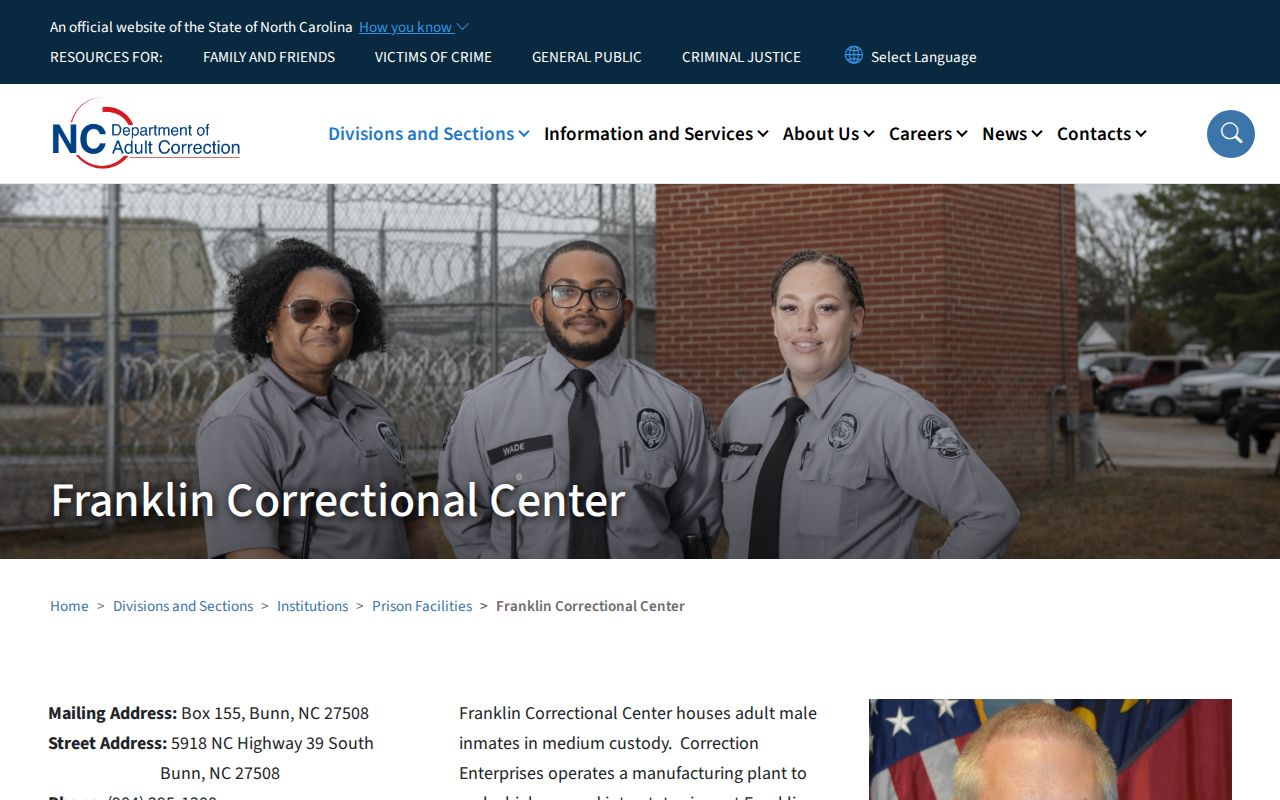
This distinction prevents a common Franklin County locator error: the county jail and the state prison share the Franklin name but serve different custody stages.
North Carolina Public Access Laws
North Carolina Public Records Law governs many agency records, but it does not turn every investigation file into an open document. Ask the office that created the record. The Sheriff cannot supply a court file held by the Clerk, and the Clerk does not become custodian of a police narrative. Inspection is usually free. Actual copy costs and a special service charge may apply when a request demands extensive technical or staff work.
Key statutes:
N.C.G.S. §132-1 broadly defines public records made or received in government business.
N.C.G.S. §132-6 provides inspection and copies at reasonable times and as promptly as possible.
N.C.G.S. §132-6.2 addresses actual copy costs and extensive-service charges.
N.C.G.S. §132-1.4 treats criminal investigation records differently while preserving specified public incident and arrest facts.
N.C.G.S. §7A-109 opens clerk records to inspection unless another law restricts them.
For a county request, describe the record, approximate date and time, location, parties, report or call number, and desired format. Records@franklincountync.gov is the researched general email route, while police-report requests are directed to the Sheriff. Ask for a cost estimate before work that may require extensive staff or technical effort.
Franklin County Warrant Record Chain
No verified official public Franklin County active-warrant list was found. Safe confirmation uses several direct channels: call the Sheriff at (919) 496-2186, call magistrates at (919) 497-4280, search eCourts for an associated public case, or ask the municipal arresting agency about its own process. North Carolina eWarrants is a justice-agency platform, not a public statewide name search.
The Sheriff's records and after-hours information helps route questions when the courthouse is closed.
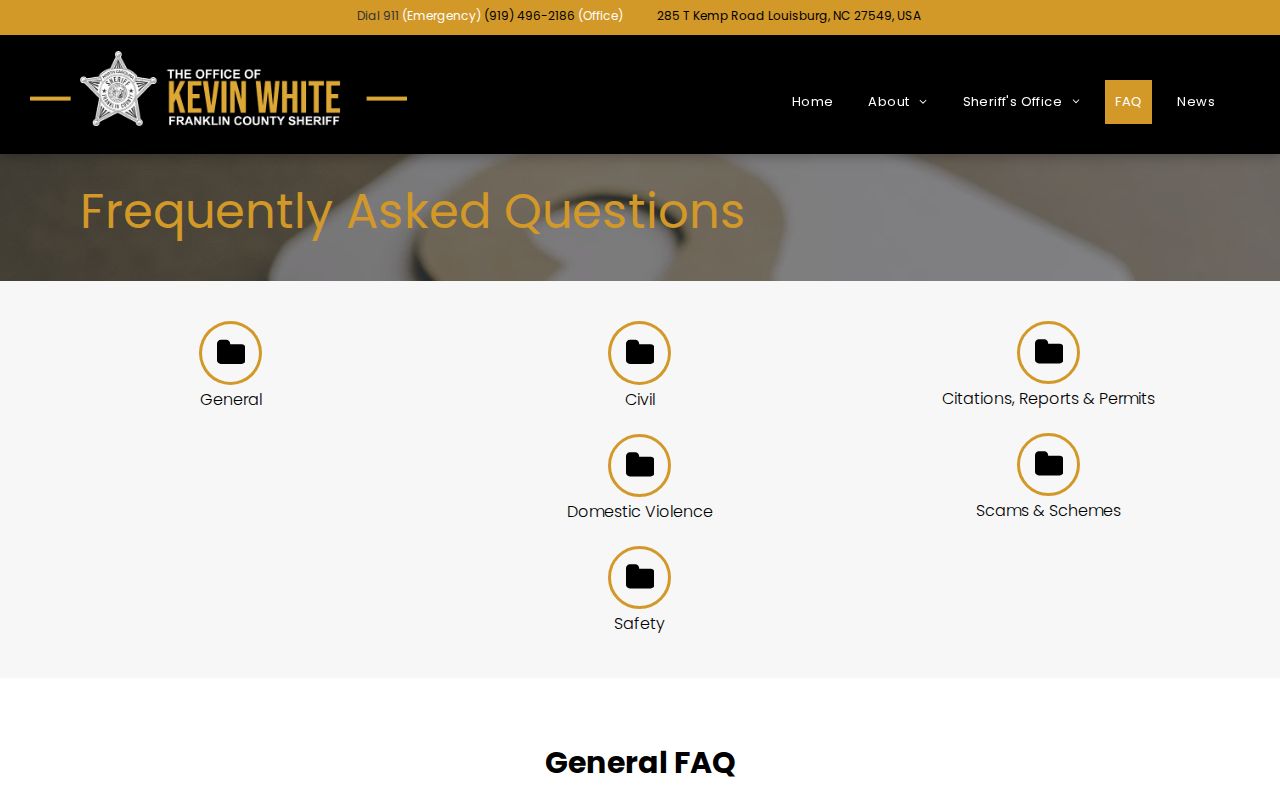
After-hours magistrate service is at the Sheriff campus. A person trying to resolve their own suspected warrant should get the file number and current conditions from an official source before appearing.
Restricted, Sealed & Expunged Records
Juvenile delinquency records, protected victim and minor information, Social Security numbers, financial identifiers, sealed process, and active investigative detail can be restricted. Expunged matters leave ordinary public access, though confidential verification may remain for uses authorized by law. A dismissal or acquittal does not by itself erase the agency arrest or booking entry.
Eligible petitions are filed with the Franklin County Clerk. The Judicial Branch form catalog includes AOC-CR-287 for specified dismissals, AOC-CR-288 for not-guilty or not-responsible outcomes, and AOC-CR-297 or 298 for certain nonviolent convictions. The general filing fee is $175. Dismissed or not-guilty petitions usually have no fee unless dismissal followed diversion or deferred prosecution. Eligibility and waiting periods depend on the controlling statute and the person's full record.
Processing may take months. An order is then distributed to government record custodians, so keep a certified copy and allow time for linked systems to update.
Franklin County SBI Record Flow
A Franklin County arrest begins with the arresting agency's report. Detention records intake, photographs, and fingerprints when the person is booked locally. Those fingerprints provide the dependable person link used by SBI. The magistrate records the first release decision, the District Attorney controls prosecution, and the Clerk records the filed case and outcome. Courts later send dispositions into the state chain.
Gaps can still occur. A disposition may arrive late or fail to match an older arrest cycle. Aliases and old paper files can also complicate a search. Compare the Franklin court file with your SBI Right to Review when correcting your own state history. Ask the agency to correct its report data, the Clerk to address court data, and SBI to handle its repository record. A fix in one system may not update every other system at once.
The record chain also explains why a single search can look incomplete without being wrong. A Franklin County police report may exist before a person is booked. A fresh booking may appear before the District Attorney settles on the counts that will be filed. The court case can then show a reduced, replaced, or dismissed charge that differs from the intake entry. SBI depends on fingerprints and later disposition reporting, so its statewide history has a different purpose from either source. For a question about the final outcome, use the Clerk's judgment. For current local custody, call detention. Use Right to Review when the question concerns your own statewide repository history.
Note: Preserve the certified disposition when challenging an unmatched or outdated repository entry; that proof helps each custodian trace the correction.
City-by-City Criminal Records in Franklin County
Louisburg, Franklinton, and Youngsville were Franklin County's three largest incorporated places in the 2020 Census. Each town creates its own police reports, while detention and criminal court records move to county offices. The city record pages keep the local desk, report channel, and handoff clear.
Louisburg Record Check
3,064 residents in 2020. Police reports and collision records begin with Louisburg Police.
Franklinton Record Check
2,456 residents in 2020. Town Hall houses the local police contact.
Youngsville Record Check
2,134 residents in 2020. Town police records route separately from county court files.
The population figures use the comparable 2020 Census place count. A town's growth does not change the basic custody rule: the local police agency keeps its report, while county detention and court offices keep their parts of the record.
Franklin County Criminal Records Growth
Franklin County counted 68,573 residents in the 2020 Census, and the researched 2024 estimate was 79,771. Growth is not proof that crime increased. It does explain greater demand on public counters and case systems. Commissioners approved next steps for a courthouse annex renovation and three-story judicial addition in April 2024, with court and Sheriff representatives involved in access and security design.
The county's eCourts change arrived that same month. Together, the physical project and digital conversion explain why an old instruction may point to a former workflow or entrance. Check the live court page before a visit because construction routing can change. Federal matters form another layer. The PACER system supplies federal dockets and documents after registration.
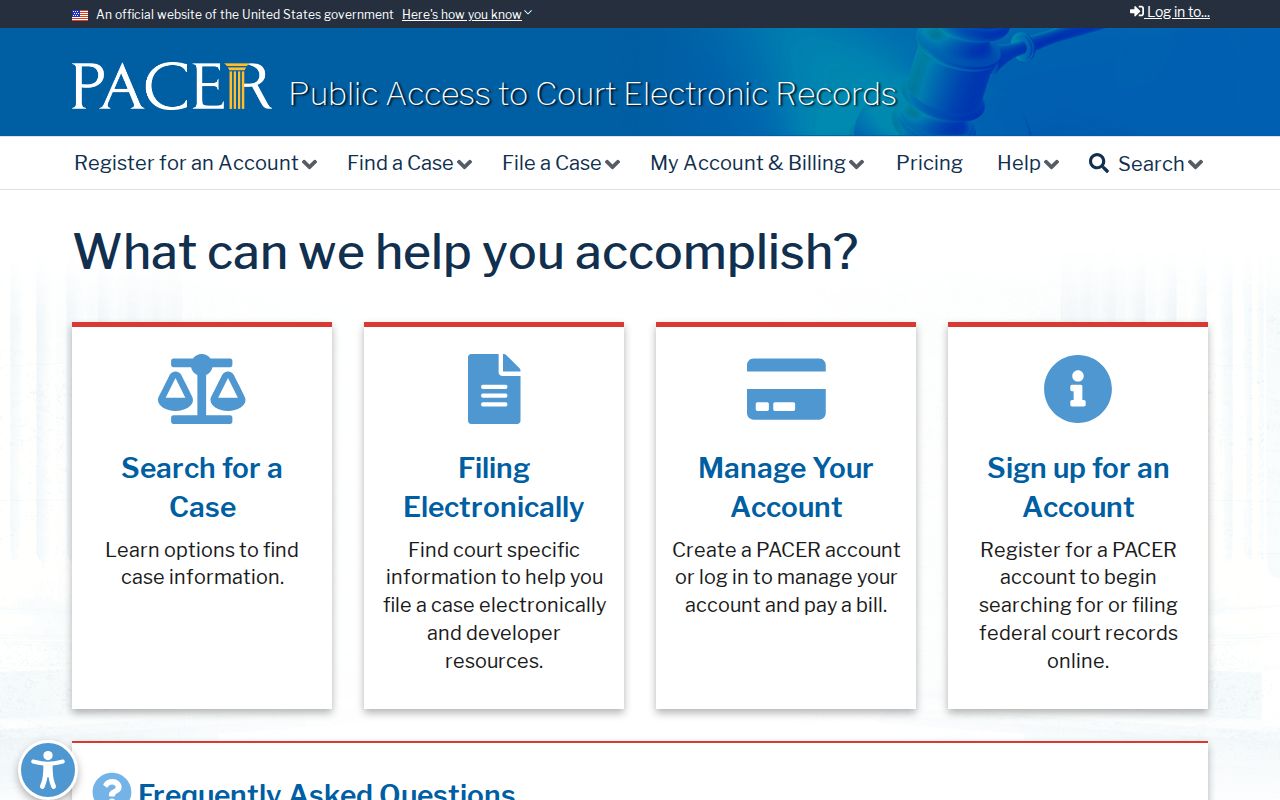
Franklin County is in the Eastern District of North Carolina, but PACER does not cover county criminal cases. Federal custody is likewise separate. The Federal Bureau of Prisons Inmate Locator covers federal inmates.
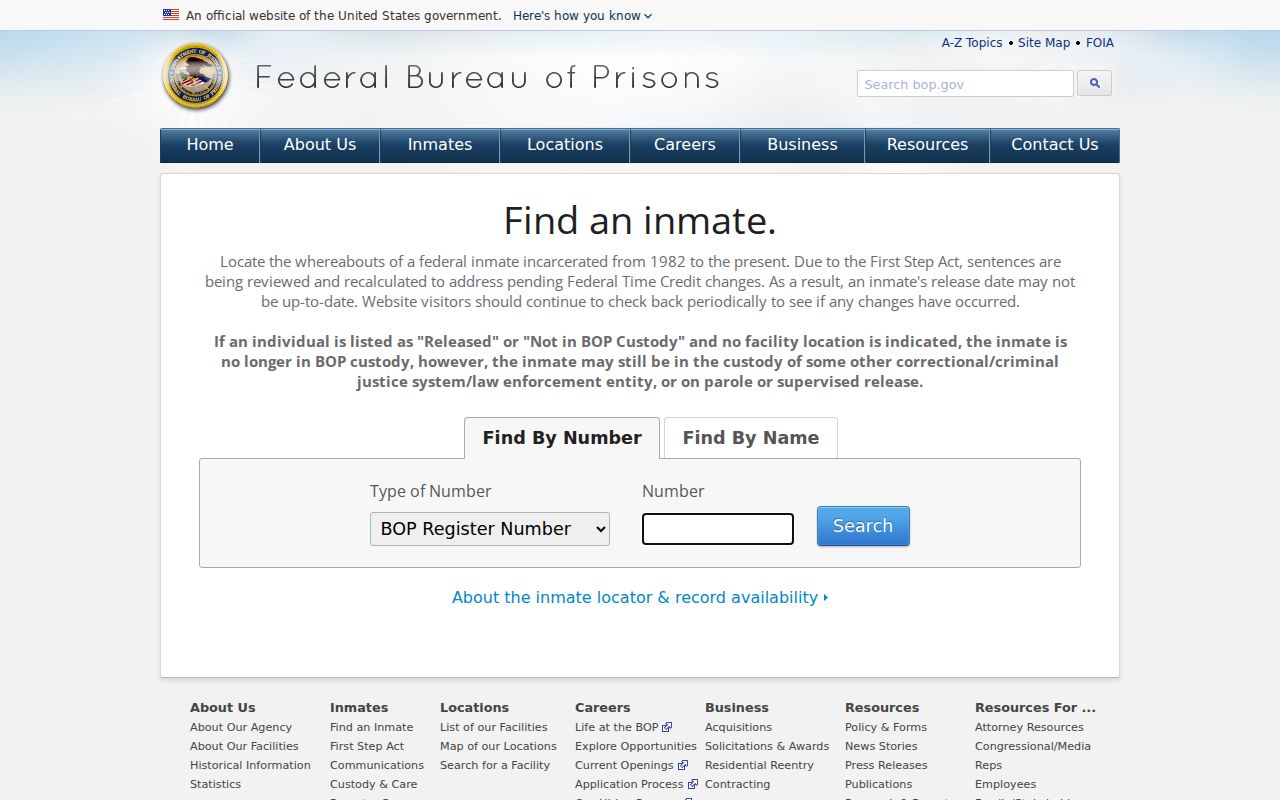
Use it only when the custody is federal, not for the Franklin County Detention Complex or NC DAC.